Code Review Visualizer
Md review
Converts a markdown PR writeup or code review (one with ```diff fenced blocks and severity-tagged > [!BLOCKER]/[!MAJOR]/[!MINOR]/[!NIT] callouts) into a single-file 2-column HTML review — unified-diff on the left, severity-tagged…
---
name: md-review
description: Converts a markdown PR writeup or code review (one with ```diff fenced blocks and severity-tagged > [!BLOCKER]/[!MAJOR]/[!MINOR]/[!NIT] callouts) into a single-file 2-column HTML review — unified-diff on the left, severity-tagged annotation cards on the right, top jump-nav listing every finding, mandatory named reviewer footer. Triggers when the markdown-html-orchestrator classifies an input as REVIEW, or when invoked directly via /cs:md-review. Refuses without explicit --reviewer (a code review must name a human), refuses if no diff hunks present (route to md-document instead), and refuses to encode severity in color only (every badge ships color + icon + aria-label per WCAG 1.4.1). Use after orchestrator routing.
version: 2.10.2
author: Alireza Rezvani
license: MIT
tags: [markdown, html, code-review, diff, severity, annotations, single-file, design-system, wcag-1.4.1]
compatible_tools: [claude-code, codex-cli, cursor, antigravity, opencode, gemini-cli]
---

# md-review — Code-review markdown → 2-column HTML

The code-review converter from Tier 2 of Shihipar's essay ("Code Review and PR Writeups"). Takes a markdown PR writeup with diff blocks + severity callouts and produces a single-file HTML review with a jump-nav, 2-column diff + annotation layout, and a named reviewer footer.

Three stdlib tools pipeline together:

```
diff_parser.py  →  annotation_extractor.py  →  review_html_renderer.py
Overview
The code-review converter from Tier 2 of Shihipar's essay ("Code Review and PR Writeups"). Takes a markdown PR writeup with diff blocks + severity callouts and produces a single-file HTML review with a jump-nav, 2-column diff + annotation layout, and a named reviewer footer.
Manual install (npx, ZIP)
npx skills add alirezarezvani/claude-skills --skill md-review -g -a claude-codenpx degit alirezarezvani/claude-skills/markdown-html/skills/md-review#main ~/.claude/skills/md-reviewConnects with Agent Alley MCP · agentalley.io/mcp
Files included
SKILL.md6.4 KB
Read SKILL.md here
Show the full text98 lines
md-review — Code-review markdown → 2-column HTML
The code-review converter from Tier 2 of Shihipar's essay ("Code Review and PR Writeups"). Takes a markdown PR writeup with diff blocks + severity callouts and produces a single-file HTML review with a jump-nav, 2-column diff + annotation layout, and a named reviewer footer.
Three stdlib tools pipeline together:
diff_parser.py  →  annotation_extractor.py  →  review_html_renderer.py
   (md → diff hunks)   (md → severity-tagged    (hunks + annotations
                        annotations attached     + tokens → 2-col HTML)
                        to nearest hunk)
When to invoke
| Symptom | Action |
|---|---|
markdown-html-orchestrator routes input as REVIEW |
Invoke this skill |
User runs /cs:md-review <path>.md directly |
Invoke this skill |
Input contains ```diff fenced blocks + > [!MAJOR]/> [!BLOCKER]/etc. callouts |
Invoke this skill |
| Input is a long-form spec / report (no diff blocks) | Route to md-document instead |
| Input is a slide deck | Route to md-slides instead |
| Input < 100 lines | Refuse (Shihipar threshold) |
| Design-system not onboarded | Refuse; surface /cs:design-system |
Pipeline
# 1. Parse markdown → diff hunks JSON
python3 markdown-html/skills/md-review/scripts/diff_parser.py \
    --input <path>.md --output hunks.json

# 2. Extract severity-tagged annotations, attach to nearest preceding hunk
python3 markdown-html/skills/md-review/scripts/annotation_extractor.py \
    --input <path>.md --diff-blocks hunks.json --output annotations.json

# 3. Render 2-col HTML (--reviewer is mandatory — refuses without)
python3 markdown-html/skills/md-review/scripts/review_html_renderer.py \
    --diff-blocks hunks.json --annotations annotations.json \
    --reviewer "Jane Doe" --title "PR #123: Add retry logic" \
    --output review.html
What gets rendered
- Top jump-nav — every annotation with severity badge + 80-char preview + jump link; severity counts in the heading ("3 BLOCKER · 2 MAJOR · 1 NIT")
- 2-column hunk rows — unified diff on the left (per-line old/new line numbers, +/− marks, addition/deletion background tint from design-system tokens), annotation cards on the right (color + icon + aria-label per WCAG 1.4.1)
- Approval bar — if
LGTMmarkers are present and no severity annotations, a success-tinted "LGTM — no findings flagged" bar - General comments — annotations not attached to any hunk render at the bottom in their own section
- Reviewer footer — mandatory; refuses to render without
--reviewer - Responsive — 2-col collapses to stacked on viewports < 900px
Hard rules
--revieweris mandatory. A code review must name a human reviewer. Refuses with exit 3 otherwise. Mirrors research-ops's "named owner" discipline.- Refuses if no hunks present. No
--- a/file+@@ ... @@blocks means this isn't a code review — refuses with exit 4 and recommendsmd-document. - Refuses input < 100 lines. Markdown wins below the threshold (Shihipar).
- Refuses without onboarding. Same gate as every converter.
- Severity is never color-only. Each badge ships color + icon +
aria-label+ text. WCAG 1.4.1 enforced at the renderer level. - Single-file output. All CSS inline. Only external is Google Fonts CSS. No Prism in md-review (diff coloring conflicts with syntax highlighting).
- Custom severity convention.
--severity-convention "critical,important,suggestion,nit"swaps tier names; position 0 is most severe. Default is BLOCKER / MAJOR / MINOR / NIT (Google Code Review Developer Guide).
Forcing-question library (Matt Pocock grill discipline)
- Who is the named reviewer? Recommended: the user signing off on the review. Canon: research-ops named-owner pattern; SWE at Google ch. 9.
- Which severity convention applies — default (BLOCKER/MAJOR/MINOR/NIT) or custom? Recommended: default unless your team has a documented alternative. Canon: Google Code Review Developer Guide.
- Are annotations anchored to specific hunks, or are some general? Recommended: anchor everything you can; general goes to the unanchored section. Canon: SWE at Google ch. 9 — "Comments must reference a specific line".
- What's the PR title for the
<title>and header? Recommended: the actual PR / commit title. Canon: docs-as-context-for-readers. - Should
LGTMmarkers ship as the approval bar? Recommended: yes if there are no severity annotations; otherwise the findings take precedence.
Distinct from
md-document— that converter renders prose + tables + code + callouts. This one renders diff hunks + margin annotations.md-slides— that converter splits on---boundaries. This one is a single-page artifact.- GitHub PR comments — those are a thread. This is a single-author snapshot artifact.
Output artifact
{default_output_dir}/review-{slug}.html (path resolved by orchestrator's output_path_resolver.py; collision suffix -2, -3, … by default).
References
- Shihipar — Claude Code HTML output (Medium, 2026), Tier 2 use case
- Software Engineering at Google (Manshreck & Wright, O'Reilly 2020), ch. 9 "Code Review"
- Google Code Review Developer Guide — severity convention source
- WCAG 2.2 §1.4.1 — color-not-sole-signal enforcement
- See
references/for full citations (diff_rendering_canon, severity_coding, pr_annotation_ux)
| 1 | |
| 2 | name md-review |
| 3 | description Converts a markdown PR writeup or code review (one with ```diff fenced blocks and severity-tagged > [!BLOCKER]/[!MAJOR]/[!MINOR]/[!NIT] callouts) into a single-file 2-column HTML review — unified-diff on the left, severity-tagged annotation cards on the right, top jump-nav listing every finding, mandatory named reviewer footer. Triggers when the markdown-html-orchestrator classifies an input as REVIEW, or when invoked directly via /cs:md-review. Refuses without explicit --reviewer (a code review must name a human), refuses if no diff hunks present (route to md-document instead), and refuses to encode severity in color only (every badge ships color + icon + aria-label per WCAG 1.4.1). Use after orchestrator routing. |
| 4 | version 2.10.2 |
| 5 | author Alireza Rezvani |
| 6 | license MIT |
| 7 | tags [markdown, html, code-review, diff, severity, annotations, single-file, design-system, wcag-1.4.1] |
| 8 | compatible_tools [claude-code, codex-cli, cursor, antigravity, opencode, gemini-cli] |
| 9 | |
| 10 | |
| 11 | # md-review — Code-review markdown → 2-column HTML |
| 12 | |
| 13 | The code-review converter from Tier 2 of Shihipar's essay ("Code Review and PR Writeups"). Takes a markdown PR writeup with diff blocks + severity callouts and produces a single-file HTML review with a jump-nav, 2-column diff + annotation layout, and a named reviewer footer. |
| 14 | |
| 15 | Three stdlib tools pipeline together: |
| 16 | |
| 17 | |
| 18 | diff_parser.py → annotation_extractor.py → review_html_renderer.py |
| 19 | (md → diff hunks) (md → severity-tagged (hunks + annotations |
| 20 | annotations attached + tokens → 2-col HTML) |
| 21 | to nearest hunk) |
| 22 | |
| 23 | |
| 24 | ## When to invoke |
| 25 | |
| 26 | | Symptom | Action | |
| 27 | |---|---| |
| 28 | | `markdown-html-orchestrator` routes input as REVIEW | Invoke this skill | |
| 29 | | User runs `/cs:md-review <path>.md` directly | Invoke this skill | |
| 30 | | Input contains ` ```diff ` fenced blocks + `> [!MAJOR]`/`> [!BLOCKER]`/etc. callouts | Invoke this skill | |
| 31 | | Input is a long-form spec / report (no diff blocks) | Route to `md-document` instead | |
| 32 | | Input is a slide deck | Route to `md-slides` instead | |
| 33 | | Input < 100 lines | Refuse (Shihipar threshold) | |
| 34 | | Design-system not onboarded | Refuse; surface `/cs:design-system` | |
| 35 | |
| 36 | ## Pipeline |
| 37 | |
| 38 | |
| 39 | # 1. Parse markdown → diff hunks JSON |
| 40 | python3 markdown-html/skills/md-review/scripts/diff_parser.py \ |
| 41 | --input <path>.md --output hunks.json |
| 42 | |
| 43 | # 2. Extract severity-tagged annotations, attach to nearest preceding hunk |
| 44 | python3 markdown-html/skills/md-review/scripts/annotation_extractor.py \ |
| 45 | --input <path>.md --diff-blocks hunks.json --output annotations.json |
| 46 | |
| 47 | # 3. Render 2-col HTML (--reviewer is mandatory — refuses without) |
| 48 | python3 markdown-html/skills/md-review/scripts/review_html_renderer.py \ |
| 49 | --diff-blocks hunks.json --annotations annotations.json \ |
| 50 | --reviewer "Jane Doe" --title "PR #123: Add retry logic" \ |
| 51 | --output review.html |
| 52 | |
| 53 | |
| 54 | ## What gets rendered |
| 55 | |
| 56 | **Top jump-nav** — every annotation with severity badge + 80-char preview + jump link; severity counts in the heading ("3 BLOCKER · 2 MAJOR · 1 NIT") |
| 57 | **2-column hunk rows** — unified diff on the left (per-line old/new line numbers, +/− marks, addition/deletion background tint from design-system tokens), annotation cards on the right (color + icon + aria-label per WCAG 1.4.1) |
| 58 | **Approval bar** — if `LGTM` markers are present and no severity annotations, a success-tinted "LGTM — no findings flagged" bar |
| 59 | **General comments** — annotations not attached to any hunk render at the bottom in their own section |
| 60 | **Reviewer footer** — mandatory; refuses to render without `--reviewer` |
| 61 | **Responsive** — 2-col collapses to stacked on viewports < 900px |
| 62 | |
| 63 | ## Hard rules |
| 64 | |
| 65 | **`--reviewer` is mandatory.** A code review must name a human reviewer. Refuses with exit 3 otherwise. Mirrors research-ops's "named owner" discipline. |
| 66 | **Refuses if no hunks present.** No `--- a/file` + `@@ ... @@` blocks means this isn't a code review — refuses with exit 4 and recommends `md-document`. |
| 67 | **Refuses input < 100 lines.** Markdown wins below the threshold (Shihipar). |
| 68 | **Refuses without onboarding.** Same gate as every converter. |
| 69 | **Severity is never color-only.** Each badge ships color + icon + `aria-label` + text. WCAG 1.4.1 enforced at the renderer level. |
| 70 | **Single-file output.** All CSS inline. Only external is Google Fonts CSS. No Prism in md-review (diff coloring conflicts with syntax highlighting). |
| 71 | **Custom severity convention.** `--severity-convention "critical,important,suggestion,nit"` swaps tier names; position 0 is most severe. Default is BLOCKER / MAJOR / MINOR / NIT (Google Code Review Developer Guide). |
| 72 | |
| 73 | ## Forcing-question library (Matt Pocock grill discipline) |
| 74 | |
| 75 | **Who is the named reviewer?** Recommended: the user signing off on the review. Canon: research-ops named-owner pattern; *SWE at Google* ch. 9. |
| 76 | **Which severity convention applies — default (BLOCKER/MAJOR/MINOR/NIT) or custom?** Recommended: default unless your team has a documented alternative. Canon: Google *Code Review Developer Guide*. |
| 77 | **Are annotations anchored to specific hunks, or are some general?** Recommended: anchor everything you can; general goes to the unanchored section. Canon: *SWE at Google* ch. 9 — "Comments must reference a specific line". |
| 78 | **What's the PR title for the `<title>` and header?** Recommended: the actual PR / commit title. Canon: docs-as-context-for-readers. |
| 79 | **Should `LGTM` markers ship as the approval bar?** Recommended: yes if there are no severity annotations; otherwise the findings take precedence. |
| 80 | |
| 81 | ## Distinct from |
| 82 | |
| 83 | **`md-document`** — that converter renders prose + tables + code + callouts. This one renders diff hunks + margin annotations. |
| 84 | **`md-slides`** — that converter splits on `---` boundaries. This one is a single-page artifact. |
| 85 | **GitHub PR comments** — those are a thread. This is a single-author snapshot artifact. |
| 86 | |
| 87 | ## Output artifact |
| 88 | |
| 89 | `{default_output_dir}/review-{slug}.html` (path resolved by orchestrator's `output_path_resolver.py`; collision suffix `-2`, `-3`, … by default). |
| 90 | |
| 91 | ## References |
| 92 | |
| 93 | Shihipar — *Claude Code HTML output* (Medium, 2026), Tier 2 use case |
| 94 | *Software Engineering at Google* (Manshreck & Wright, O'Reilly 2020), ch. 9 "Code Review" |
| 95 | Google *Code Review Developer Guide* — severity convention source |
| 96 | WCAG 2.2 §1.4.1 — color-not-sole-signal enforcement |
| 97 | See `references/` for full citations (diff_rendering_canon, severity_coding, pr_annotation_ux) |
| 98 |
Details
- Version
- 2.10.2
- Updated
- Aug 30, 2026
- License
- MIT
- Stars on the repo
- ★ 26,349
- Checked
- Source
- alirezarezvani/claude-skills ↗
- Creator
- alirezarezvani · 363 listings
Similar skills
See all → SkillCode Review Feedback Analyzer
 obra/superpowers · by obraUse when receiving code review feedback, before implementing suggestions, especially if feedback seems unclear or technically questionable - requires technical rigor and verification, not performative agreement or blind implementation★ 290k GitHub stars
 SkillCode Review Expert
 HoangNguyen0403/agent-skills-standard · by HoangNguyen0403Conduct high-quality, persona-driven code reviews. Use when reviewing PRs, critiquing code quality, or analyzing changes for team feedback.★ 569 GitHub stars
 SkillContent Explainer
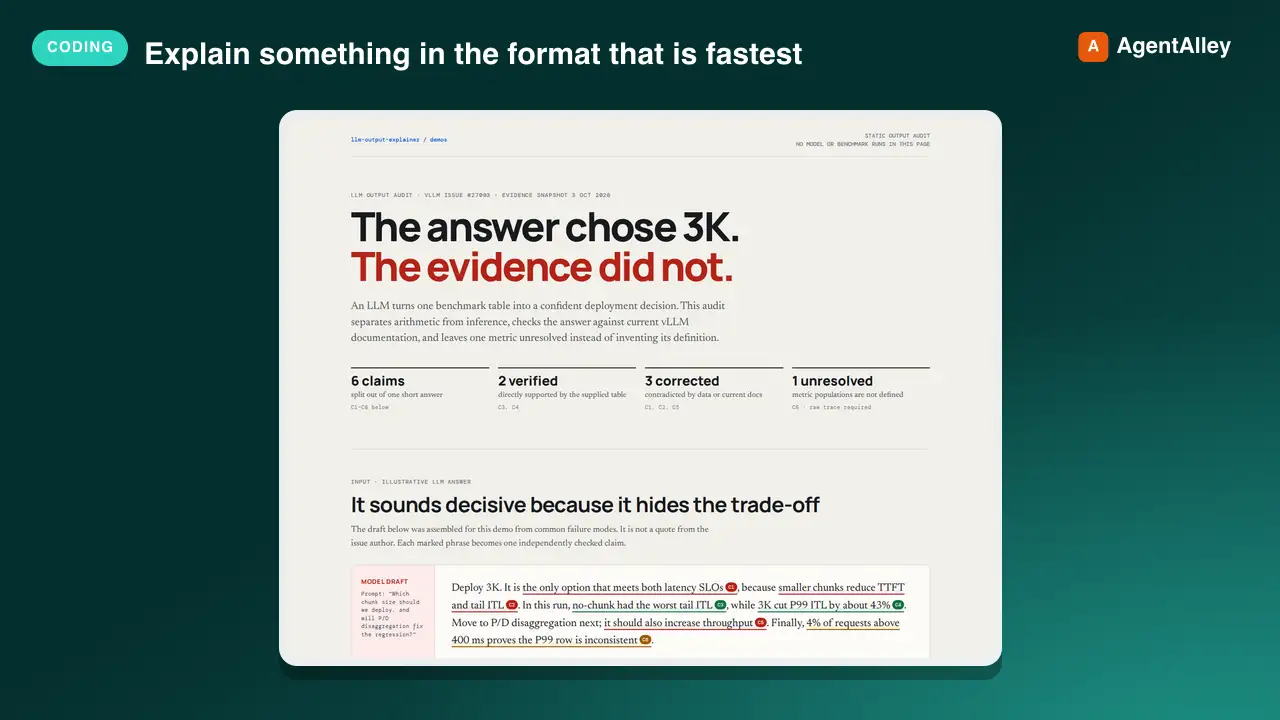
 JohnQinAMD/llm-output-explainer · by JohnQinAMDExplain something in the format that is fastest to understand, from controlled English (ASD-STE100 style), to a diagram, to an interactive HTML page, to a narrated explainer video. Check facts against their sources, using parallel subagents for independent evidence streams when the host supports them. Use when the user wants to understand a substantial concept, algorithm, code change, pull request, paper, benchmark result, or agent output, or asks for an explainer, diagram, HTML explanation, STE, or video. Not for one-line answers, drafting a pull request description, or code review.★ 4 GitHub stars
 SkillCode Review Requesterobra/superpowers · by obraUse when completing tasks, implementing major features, or before merging to verify work meets requirements★ 290k GitHub stars
 SkillMulti-Axis Code Review
 addyosmani/agent-skills · by addyosmaniConducts multi-axis code review. Use before merging any change. Use when reviewing code written by yourself, another agent, or a human. Use when you need to assess code quality across multiple dimensions before it enters the main branch.★ 98.7k GitHub stars
 SkillCode Clarity Simplifieraddyosmani/agent-skills · by addyosmaniSimplifies code for clarity. Use when refactoring code for clarity without changing behavior. Use when code works but is harder to read, maintain, or extend than it should be. Use when reviewing code that has accumulated unnecessary complexity.★ 98.7k GitHub stars
More from alirezarezvani
 SkillExperiment Resume Tool
 alirezarezvani/claude-skills · by alirezarezvaniResume a paused experiment. Checkout the experiment branch, read results history, continue iterating. Use when the user runs /ar:ar-resume or asks to pick up a previously started autoresearch experiment.★ 26.3k GitHub stars
 SkillExperiment Dashboard Vieweralirezarezvani/claude-skills · by alirezarezvaniShow experiment dashboard with results, active loops, and progress. Use when the user runs /ar:ar-status or asks how an autoresearch experiment is going.★ 26.3k GitHub stars
 SkillAutonomous Experiment Runneralirezarezvani/claude-skills · by alirezarezvaniStart an autonomous experiment loop with user-selected interval (10min, 1h, daily, weekly, monthly). Uses CronCreate for scheduling. Use when the user runs /ar:loop or asks to run an autoresearch experiment continuously on a schedule.★ 26.3k GitHub stars
 SkillSingle Experiment Iteratoralirezarezvani/claude-skills · by alirezarezvaniRun a single experiment iteration. Edit the target file, evaluate, keep or discard. Use when the user runs /ar:run or asks for one manual autoresearch iteration.★ 26.3k GitHub stars
 SkillAutoresearch Experiment Setupalirezarezvani/claude-skills · by alirezarezvaniSet up a new autoresearch experiment interactively. Collects domain, target file, eval command, metric, direction, and evaluator. Use when the user runs /ar:setup or asks to start optimizing a file with the autoresearch loop.★ 26.3k GitHub stars
 SkillExecutive Boardroom Deliberatoralirezarezvani/claude-skills · by alirezarezvani/cs:boardroom <brief> — 6-phase multi-role deliberation across the C-suite with Phase 2 isolation, critic pre-screen, and synthesis. Outputs a board memo. Use when a decision spans multiple executive domains — e.g. a pricing change touching finance, positioning, and product, or a raise-vs-cut runway call.★ 26.3k GitHub stars