Sales One-Pager Creator
One pager builder
Create one-page sales documents — product overviews, meeting leave-behinds, champion enablement sheets, trade show handouts. Scannable in 30 seconds, memorable enough to forward.
---
name: one-pager-builder
description: >-
  Create one-page sales documents — product overviews, meeting leave-behinds,
  champion enablement sheets, trade show handouts. Scannable in 30 seconds,
  memorable enough to forward. Use when creating one-pagers, leave-behinds, quick
  reference sheets, or sales handouts. Triggers on: "one-pager", "leave-behind",
  "product overview", "handout", "champion doc", "sales sheet", or any request
  for a single-page sales document.
license: MIT
compatibility: Claude Code, Codex, GitHub Copilot, Cursor, Gemini CLI, OpenCode, Goose, Hermes, Windsurf, Zed
metadata:
  version: "1.1.1"
  author: LeadMagic
  category: design
  tags: [one-pager, sales, collateral, design, leave-behind]
  related_skills: [sales-enablement, pitch-deck-builder, battlecard-builder]
  frameworks:
Overview
A one-pager is exactly one page. Not a two-page brochure folded in half. One side of one sheet. It tells a prospect everything they need to know in 30 seconds of scanning, and it's valuable enough that a champion forwards it to their boss.
Manual install (npx, ZIP)
npx skills add LeadMagic/gtm-skills --skill one-pager-builder -g -a claude-codenpx degit LeadMagic/gtm-skills/skills/design/one-pager-builder#main ~/.claude/skills/one-pager-builderConnects with Agent Alley MCP · agentalley.io/mcp
Files included
SKILL.md7.4 KB
Read SKILL.md here
Show the full text200 lines
One-Pager Builder
Overview
A one-pager is exactly one page. Not a two-page brochure folded in half. One side of one sheet. It tells a prospect everything they need to know in 30 seconds of scanning, and it's valuable enough that a champion forwards it to their boss.
The constraint is the value. One page forces clarity. No room for fluff.
Authoritative Foundations
- AIDA (Attention, Interest, Desire, Action) — Order the page from hook to proof to call to action so it reads top-down in under a minute.
- Robert Cialdini — Influence — Influence principles — reciprocity, social proof, authority in copy.
- Nielsen Norman Group — How users read on the web — Readers scan; use headings, short bullets, and one visual so the page works at a glance.
When to Use
- "Create a one-pager for our product"
- "Build a leave-behind for this meeting"
- "Make a champion enablement doc"
- "Create a trade show handout"
- "I need a sales sheet"
- "Design a quick-reference for prospects"
Step-by-Step Process
Phase 1: Variant Selection
Choose the right type:
Product Overview For initial meetings. Problem → Solution → 3 Differentiators → Proof → CTA. Answers "what do you do and why should I care?"
Post-Meeting Leave-Behind Reinforce what was discussed. References specific pain points from the conversation. Keeps momentum between meetings.
Champion Enablement Arms your internal champion to sell for you. Includes: how to describe the problem, how to describe the solution, ROI data, answers to likely objections, and a draft email they can forward to their boss.
Trade Show Handout Quick intro that drives follow-up. Visual-heavy, minimal text. QR code to demo or calendar. Scannable in 10 seconds in a noisy booth.
Phase 2: Content Structure
Every one-pager follows the same skeleton. Adapt per variant:
┌─────────────────────────────────────┐
│ LOGO              [Product Name]    │
│                                     │
│ HEADLINE: [Value prop, <10 words]   │
│ Subheadline: [Who it's for]         │
│                                     │
│ ┌─────────┐  ┌─────────┐ ┌───────┐ │
│ │ Problem │  │Solution │ │Proof  │ │
│ │ 1-2     │  │ 3 key   │ │1 strong│ │
│ │ sentences│  │ benefits│ │metric  │ │
│ └─────────┘  └─────────┘ └───────┘ │
│                                     │
│ "Quote from customer or analyst"    │
│                                     │
│ CTA: [One clear next step]          │
│ Contact: [email protected]           │
└─────────────────────────────────────┘
- Problem statement — one sentence. Use the prospect's language.
- Solution — what you do and how. 3 key benefits, not 10.
- 3 differentiators — why you vs alternatives. Specific, provable.
- Proof point — one strong metric or customer quote. Not five weak ones.
- CTA — clear next step with specific contact person.
Phase 3: Design Principles
- One page, literally. Front only or front-and-back maximum.
- Scannable in 30 seconds. Bold headers, short bullets, whitespace.
- Visual hierarchy: headline first (largest), benefits second, proof third.
- Logo prominent — brand recognition matters.
- Specific contact — never info@. A real person's name and email.
- Match brand colors — this is a brand touchpoint.
Phase 4: Variant-Specific Templates
Champion Enablement One-Pager: Add: "How to describe this to your team" (3 bullet summary), ROI data for internal approval, common objections and answers, draft email they can forward.
Post-Meeting Leave-Behind: Add: "As we discussed" section referencing specific pain points, personalized next steps, your contact info prominently.
Output Format
One-pager copy with layout guidance:
# One-Pager: [Product] — [Variant]

## Headline
[Value prop, under 10 words]

## Subheadline
[Who it's for]

## Problem
[One sentence in customer language]

## Solution
1. [Benefit 1 — outcome focused]
2. [Benefit 2 — outcome focused]
3. [Benefit 3 — outcome focused]

## Differentiators
1. [Specific, provable claim]
2. [Specific, provable claim]
3. [Specific, provable claim]

## Proof
"[Customer quote]" — [Name, Company]
[Or: one strong metric]

## CTA
[One clear action + contact info]

## Layout Notes
[Visual hierarchy guidance, section placement]
Quality Check
- Fits on one physical page (not two pages crammed)
- Scannable in 30 seconds — bold headers visible, bullets short
- Problem stated in customer language, not marketing copy
- Differentiators are specific and provable
- CTA is clear — one action, not three
- Contact is a specific person, not info@
- Brand colors and logo placement noted
- Variant-appropriate sections included (champion email, trade show QR)
Common Pitfalls
Two pages pretending to be one. If it takes 5 minutes to read, it's a brochure. Cut ruthlessly. Every sentence must earn its space.
Feature list, not benefit list. "10GB storage" → "Store 50,000 files without worrying about space."
No CTA. What should they do after reading? Visit a URL? Book a call? Email someone? Make it specific.
Generic differentiators. "Best-in-class" means nothing. "Only solution that verifies emails in real-time at 99%+ accuracy" means something.
[email protected] as contact. A one-pager with a generic email address signals "we don't actually want you to reach out."
Execution Artifacts
references/framework-notes.md— named frameworks, citation anchors, and operating assumptionstemplates/output-template.md— copy-paste deliverable structure for the userscripts/check-output.py— local checklist validator for required sections This skill includes lightweight artifacts the agent can load on demand: Use the artifacts when the user asks for an implementation-ready deliverable, a repeatable workflow, or a quality check rather than generic advice.
Related Skills
- pitch-deck-builder: Multi-slide presentations
- battlecard-builder: Competitive comparison documents
- sales-enablement: Complete enablement package
- case-study-builder: Customer stories in sales format
| 1 | |
| 2 | name one-pager-builder |
| 3 | description >- |
| 4 | Create one-page sales documents — product overviews, meeting leave-behinds, |
| 5 | champion enablement sheets, trade show handouts. Scannable in 30 seconds, |
| 6 | memorable enough to forward. Use when creating one-pagers, leave-behinds, quick |
| 7 | reference sheets, or sales handouts. Triggers on: "one-pager", "leave-behind", |
| 8 | "product overview", "handout", "champion doc", "sales sheet", or any request |
| 9 | for a single-page sales document. |
| 10 | license MIT |
| 11 | compatibility Claude Code, Codex, GitHub Copilot, Cursor, Gemini CLI, OpenCode, Goose, Hermes, Windsurf, Zed |
| 12 | metadata |
| 13 | version "1.1.1" |
| 14 | author LeadMagic |
| 15 | category design |
| 16 | tags [one-pager, sales, collateral, design, leave-behind] |
| 17 | related_skills [sales-enablement, pitch-deck-builder, battlecard-builder] |
| 18 | frameworks |
| 19 | - "AIDA (Attention, Interest, Desire, Action)" |
| 20 | - "Robert Cialdini — Influence" |
| 21 | - "Nielsen Norman Group — How users read on the web" |
| 22 | |
| 23 | |
| 24 | # One-Pager Builder |
| 25 | |
| 26 | ## Overview |
| 27 | |
| 28 | A one-pager is exactly one page. Not a two-page brochure folded in half. One |
| 29 | side of one sheet. It tells a prospect everything they need to know in 30 |
| 30 | seconds of scanning, and it's valuable enough that a champion forwards it to |
| 31 | their boss. |
| 32 | |
| 33 | The constraint is the value. One page forces clarity. No room for fluff. |
| 34 | |
| 35 | ## Authoritative Foundations |
| 36 | **AIDA (Attention, Interest, Desire, Action)** — Order the page from hook to proof to call to action so it reads top-down in under a minute. |
| 37 | **Robert Cialdini — Influence** — Influence principles — reciprocity, social proof, authority in copy. |
| 38 | **Nielsen Norman Group — How users read on the web** — Readers scan; use headings, short bullets, and one visual so the page works at a glance. |
| 39 | |
| 40 | ## When to Use |
| 41 | |
| 42 | "Create a one-pager for our product" |
| 43 | "Build a leave-behind for this meeting" |
| 44 | "Make a champion enablement doc" |
| 45 | "Create a trade show handout" |
| 46 | "I need a sales sheet" |
| 47 | "Design a quick-reference for prospects" |
| 48 | |
| 49 | ## Step-by-Step Process |
| 50 | |
| 51 | ### Phase 1: Variant Selection |
| 52 | |
| 53 | Choose the right type: |
| 54 | |
| 55 | **Product Overview** |
| 56 | For initial meetings. Problem → Solution → 3 Differentiators → Proof → CTA. |
| 57 | Answers "what do you do and why should I care?" |
| 58 | |
| 59 | **Post-Meeting Leave-Behind** |
| 60 | Reinforce what was discussed. References specific pain points from the |
| 61 | conversation. Keeps momentum between meetings. |
| 62 | |
| 63 | **Champion Enablement** |
| 64 | Arms your internal champion to sell for you. Includes: how to describe the |
| 65 | problem, how to describe the solution, ROI data, answers to likely objections, |
| 66 | and a draft email they can forward to their boss. |
| 67 | |
| 68 | **Trade Show Handout** |
| 69 | Quick intro that drives follow-up. Visual-heavy, minimal text. QR code to |
| 70 | demo or calendar. Scannable in 10 seconds in a noisy booth. |
| 71 | |
| 72 | ### Phase 2: Content Structure |
| 73 | |
| 74 | Every one-pager follows the same skeleton. Adapt per variant: |
| 75 | |
| 76 | |
| 77 | ┌─────────────────────────────────────┐ |
| 78 | │ LOGO [Product Name] │ |
| 79 | │ │ |
| 80 | │ HEADLINE: [Value prop, <10 words] │ |
| 81 | │ Subheadline: [Who it's for] │ |
| 82 | │ │ |
| 83 | │ ┌─────────┐ ┌─────────┐ ┌───────┐ │ |
| 84 | │ │ Problem │ │Solution │ │Proof │ │ |
| 85 | │ │ 1-2 │ │ 3 key │ │1 strong│ │ |
| 86 | │ │ sentences│ │ benefits│ │metric │ │ |
| 87 | │ └─────────┘ └─────────┘ └───────┘ │ |
| 88 | │ │ |
| 89 | │ "Quote from customer or analyst" │ |
| 90 | │ │ |
| 91 | │ CTA: [One clear next step] │ |
| 92 | │ Contact: [email protected] │ |
| 93 | └─────────────────────────────────────┘ |
| 94 | |
| 95 | |
| 96 | **Problem statement** — one sentence. Use the prospect's language. |
| 97 | **Solution** — what you do and how. 3 key benefits, not 10. |
| 98 | **3 differentiators** — why you vs alternatives. Specific, provable. |
| 99 | **Proof point** — one strong metric or customer quote. Not five weak ones. |
| 100 | **CTA** — clear next step with specific contact person. |
| 101 | |
| 102 | ### Phase 3: Design Principles |
| 103 | |
| 104 | **One page, literally.** Front only or front-and-back maximum. |
| 105 | **Scannable in 30 seconds.** Bold headers, short bullets, whitespace. |
| 106 | **Visual hierarchy:** headline first (largest), benefits second, proof third. |
| 107 | **Logo prominent** — brand recognition matters. |
| 108 | **Specific contact** — never info@. A real person's name and email. |
| 109 | **Match brand colors** — this is a brand touchpoint. |
| 110 | |
| 111 | ### Phase 4: Variant-Specific Templates |
| 112 | |
| 113 | **Champion Enablement One-Pager:** |
| 114 | Add: "How to describe this to your team" (3 bullet summary), ROI data for |
| 115 | internal approval, common objections and answers, draft email they can forward. |
| 116 | |
| 117 | **Post-Meeting Leave-Behind:** |
| 118 | Add: "As we discussed" section referencing specific pain points, personalized |
| 119 | next steps, your contact info prominently. |
| 120 | |
| 121 | ## Output Format |
| 122 | |
| 123 | One-pager copy with layout guidance: |
| 124 | |
| 125 | |
| 126 | # One-Pager: [Product] — [Variant] |
| 127 | |
| 128 | ## Headline |
| 129 | [Value prop, under 10 words] |
| 130 | |
| 131 | ## Subheadline |
| 132 | [Who it's for] |
| 133 | |
| 134 | ## Problem |
| 135 | [One sentence in customer language] |
| 136 | |
| 137 | ## Solution |
| 138 | 1. [Benefit 1 — outcome focused] |
| 139 | 2. [Benefit 2 — outcome focused] |
| 140 | 3. [Benefit 3 — outcome focused] |
| 141 | |
| 142 | ## Differentiators |
| 143 | 1. [Specific, provable claim] |
| 144 | 2. [Specific, provable claim] |
| 145 | 3. [Specific, provable claim] |
| 146 | |
| 147 | ## Proof |
| 148 | "[Customer quote]" — [Name, Company] |
| 149 | [Or: one strong metric] |
| 150 | |
| 151 | ## CTA |
| 152 | [One clear action + contact info] |
| 153 | |
| 154 | ## Layout Notes |
| 155 | [Visual hierarchy guidance, section placement] |
| 156 | |
| 157 | |
| 158 | ## Quality Check |
| 159 | |
| 160 | [ ] Fits on one physical page (not two pages crammed) |
| 161 | [ ] Scannable in 30 seconds — bold headers visible, bullets short |
| 162 | [ ] Problem stated in customer language, not marketing copy |
| 163 | [ ] Differentiators are specific and provable |
| 164 | [ ] CTA is clear — one action, not three |
| 165 | [ ] Contact is a specific person, not info@ |
| 166 | [ ] Brand colors and logo placement noted |
| 167 | [ ] Variant-appropriate sections included (champion email, trade show QR) |
| 168 | |
| 169 | ## Common Pitfalls |
| 170 | |
| 171 | **Two pages pretending to be one.** If it takes 5 minutes to read, it's |
| 172 | a brochure. Cut ruthlessly. Every sentence must earn its space. |
| 173 | |
| 174 | **Feature list, not benefit list.** "10GB storage" → "Store 50,000 files |
| 175 | without worrying about space." |
| 176 | |
| 177 | **No CTA.** What should they do after reading? Visit a URL? Book a call? |
| 178 | Email someone? Make it specific. |
| 179 | |
| 180 | **Generic differentiators.** "Best-in-class" means nothing. "Only solution |
| 181 | that verifies emails in real-time at 99%+ accuracy" means something. |
| 182 | |
| 183 | **[email protected] as contact.** A one-pager with a generic email address |
| 184 | signals "we don't actually want you to reach out." |
| 185 | |
| 186 | ## Execution Artifacts |
| 187 | |
| 188 | `references/framework-notes.md` — named frameworks, citation anchors, and operating assumptions |
| 189 | `templates/output-template.md` — copy-paste deliverable structure for the user |
| 190 | `scripts/check-output.py` — local checklist validator for required sections |
| 191 | This skill includes lightweight artifacts the agent can load on demand: |
| 192 | Use the artifacts when the user asks for an implementation-ready deliverable, a repeatable workflow, or a quality check rather than generic advice. |
| 193 | |
| 194 | ## Related Skills |
| 195 | |
| 196 | **pitch-deck-builder**: Multi-slide presentations |
| 197 | **battlecard-builder**: Competitive comparison documents |
| 198 | **sales-enablement**: Complete enablement package |
| 199 | **case-study-builder**: Customer stories in sales format |
| 200 |
Details
- License
- MIT
- Stars on the repo
- ★ 62
- Checked
- Source
- LeadMagic/gtm-skills ↗
- Creator
- LeadMagic · 129 listings
Similar skills
See all →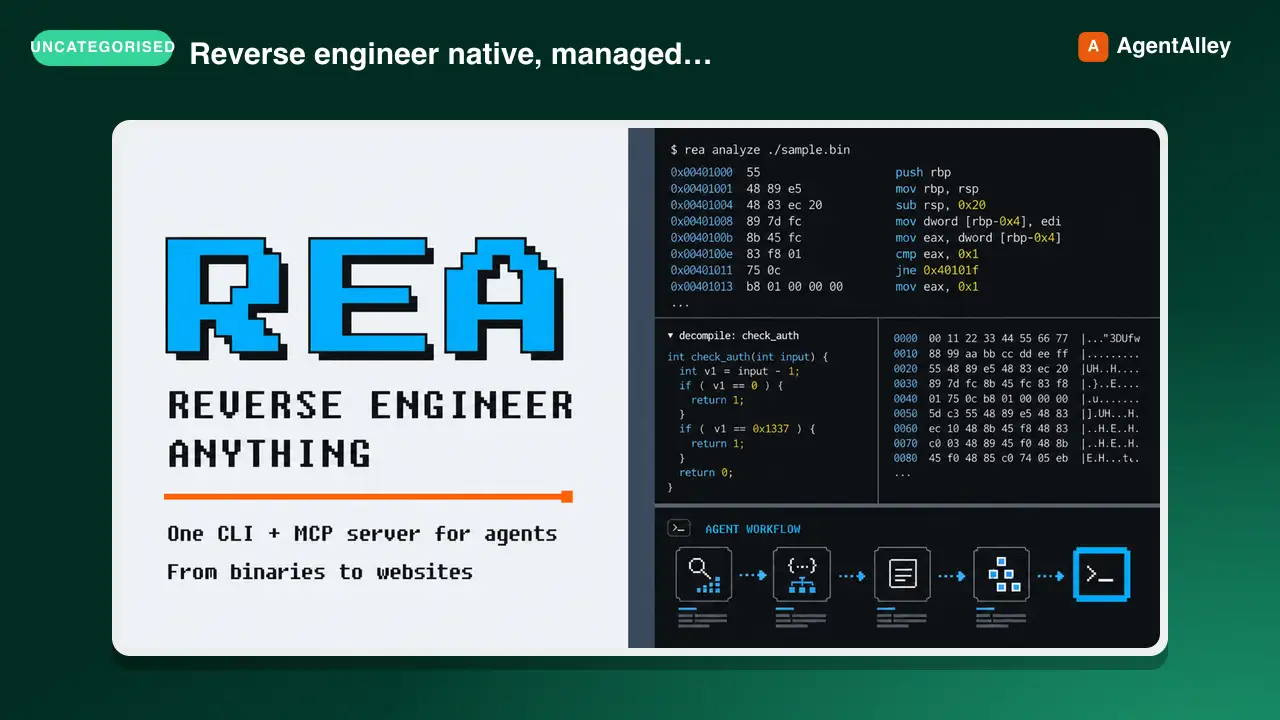 SkillCross-Platform Reverse Engineer
 morluto/rea · by morlutoReverse engineer native, managed, Electron/JavaScript, packaged, firmware, and browser targets with REA. Use shipped-artifact or requested runtime evidence to explain features, compare versions, decompile code, or guide a reconstruction. Skip REA for ordinary source-repository architecture analysis.★ 316k GitHub stars
 SkillBrainstorm Ideas
 obra/superpowers · by obraYou MUST use this before any creative work - creating features, building components, adding functionality, or modifying behavior. Explores user intent, requirements and design before implementation.★ 290k GitHub stars
 SkillCode Review Feedback Analyzerobra/superpowers · by obraUse when receiving code review feedback, before implementing suggestions, especially if feedback seems unclear or technically questionable - requires technical rigor and verification, not performative agreement or blind implementation★ 290k GitHub stars
 SkillBug Diagnosis Framework
 mattpocock/skills · by mattpocockDiagnosis loop for hard bugs and performance regressions. Use when the user says "diagnose"/"debug this", or reports something broken/throwing/failing/slow.★ 267k GitHub stars
 SkillImplement Specmattpocock/skills · by mattpocockImplement the result of /to-spec and /to-tickets in code.★ 267k GitHub stars
 SkillPR Description Writermattpocock/skills · by mattpocockUse when writing a PR body.★ 267k GitHub stars
More from LeadMagic
 SkillFirst-Party Analytics Setup
 LeadMagic/gtm-skills · by LeadMagicSet up first-party tracking and analytics — website pixels, conversion tracking, UTM architecture, cookie consent, server-side tagging vs client-side, 1P vs 3P data strategy, and identity resolution. Use when setting up tracking, implementing pixels, building attribution, or preparing for privacy-first measurement. Triggers on: "pixel", "tracking", "conversion tracking", "first-party data", server-side tagging", "UTM", "cookie consent", "1P vs 3P", "identity resolution", or any tracking implementation request.★ 62 GitHub stars
 SkillStrategic Account MarketingLeadMagic/gtm-skills · by LeadMagicRuns strategic 1-to-1 ABM for 5-15 high-value accounts: account plans, custom microsites, executive engagement, direct mail, and board-level connections. Use when a named enterprise account justifies bespoke content and executive time, or when the user needs a strategic account plan. Triggers on: "1-to-1 ABM", "strategic ABM", "custom ABM", "key account marketing", "named account".★ 62 GitHub stars
 SkillCluster Account MarketingLeadMagic/gtm-skills · by LeadMagicRuns ABM at scale (1-to-few) for 15-50 clustered accounts: industry or persona clusters, semi-custom campaigns, and cluster-level content. Use when named-account ABM needs to reach more accounts without bespoke work per account. Triggers on: "1-to-few ABM", "ABM scale", "cluster ABM", "industry ABM".★ 62 GitHub stars
 SkillProgrammatic Account TargetingLeadMagic/gtm-skills · by LeadMagicRuns programmatic 1-to-many ABM for 50-200+ accounts: automated personalization, scaled outbound, intent-based targeting, and lookalike expansion. Use when ABM coverage must grow without adding headcount or when the user wants automated account-based outreach. Triggers on: "1-to-many ABM", programmatic ABM", "scaled ABM", "automated ABM".★ 62 GitHub stars
 SkillAccount Strategy DesignerLeadMagic/gtm-skills · by LeadMagicDesigns an account-based marketing program: tier selection, account scoring, channel orchestration, BDR alignment (account-based sales development), and a measurement framework. Use when the user is launching or redesigning ABM, choosing between 1-to-1, 1-to-few, and 1-to-many, or building a target account program. Triggers on: "ABM strategy", "account based marketing", "ABM playbook", "design ABM", "target accounts", "ABSD", "account based sales development", "Lars Nilsson".★ 62 GitHub stars
 SkillTarget Account SelectorLeadMagic/gtm-skills · by LeadMagicBuilds and tiers a target account list: fit and intent scoring models, tier assignment, and TAM segmentation. Use when the user needs to decide which accounts to target, score or tier an account list, or prioritize a TAM for ABM or outbound. Triggers on: "account selection", "target account list", "tier accounts", "prioritize accounts", "TAM segmentation".★ 62 GitHub stars